Welcome to the Observatory's Front Page. Included here are some of the latest news and articles that may be of interest to our visitors.
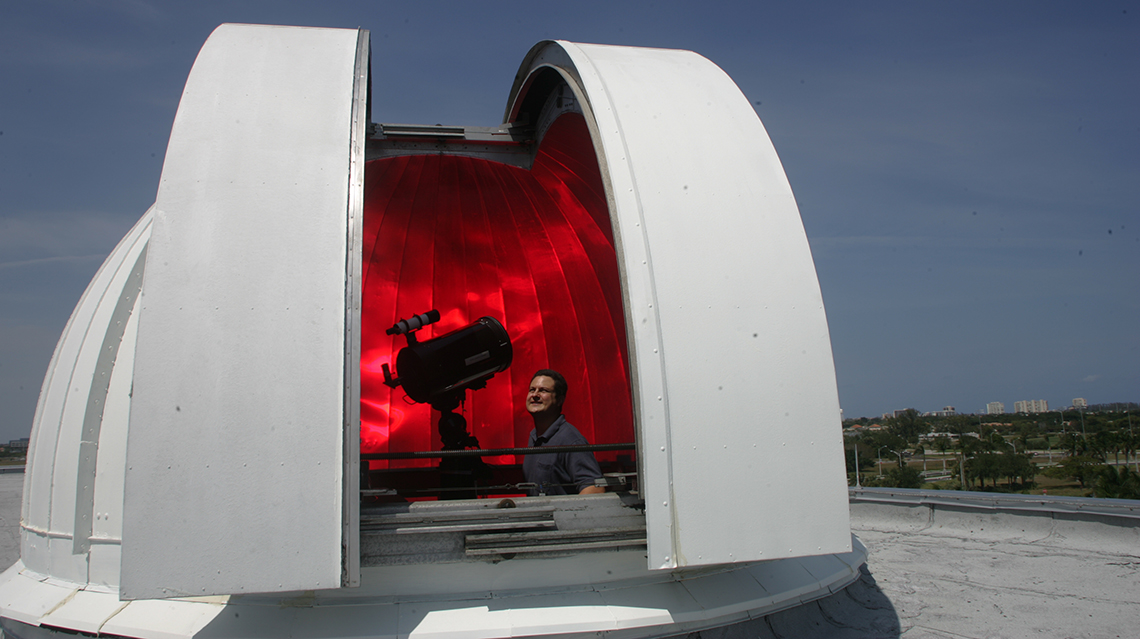
FAU's Astronomical Observatory is housed under a four meter diameter dome on the Boca Raton campus of Florida Atlantic University. We welcome students, faculty, staff and members of the general public to join our scheduled observations or our public viewing events. Our telescope is mounted on a small platform, at the top of stairs, looking out of the roof of our building, over Boca Raton, to space and beyond!
Section updated: Mar. 30th, 2026.
You may have heard of π Day – March 14th (as in 3/14 as the first 3 digits of the mathematical constant of π). That day is also Albert Einstein’s birthday, the day that Steven Hawking died, and the anniversary of Uranus’s discovery, too. Well, I came across a Reddit discussion about an idea of days for the other mathematical constants. A day to represent the imaginary number was proposed by Putty Putman on his webpage ( https://www.puttyputman.com/post/imaginary-number-day ). His argument is based on the complex number plane, in that i is one basic unit up on the vertical imaginary axis and also represents 1/4th of the unit circle there. So, he calculated the day that is 1/4th of the year, or 365/4 ≈ 91. The 91st day of the year is April 1st, which is so appropriate! So, I’m following his lead on this and mark the day to be declared so, too. What could one do on such a day? Well, people could dress up in fantasy inspired clothing or be like the mathematician Leonhard Euler (though I’m not certain how to wrap that hat-cloth of his!) or play complex games or eat imaginary food! Others could offer up even better ideas. Would it be silly? Of course it is! And why not have such a day? It would give mathematicians chances to have fun with it and provide them a “teaching moment opportunity” to talk to others about this difficult to ponder concept for most folks, and yet show how we actually use it, such as the discovery of anti-matter. Have you ever had a PET scan done? That is an example of medicine capturing and imaging anti-matter positrons that are emitted out of your body!
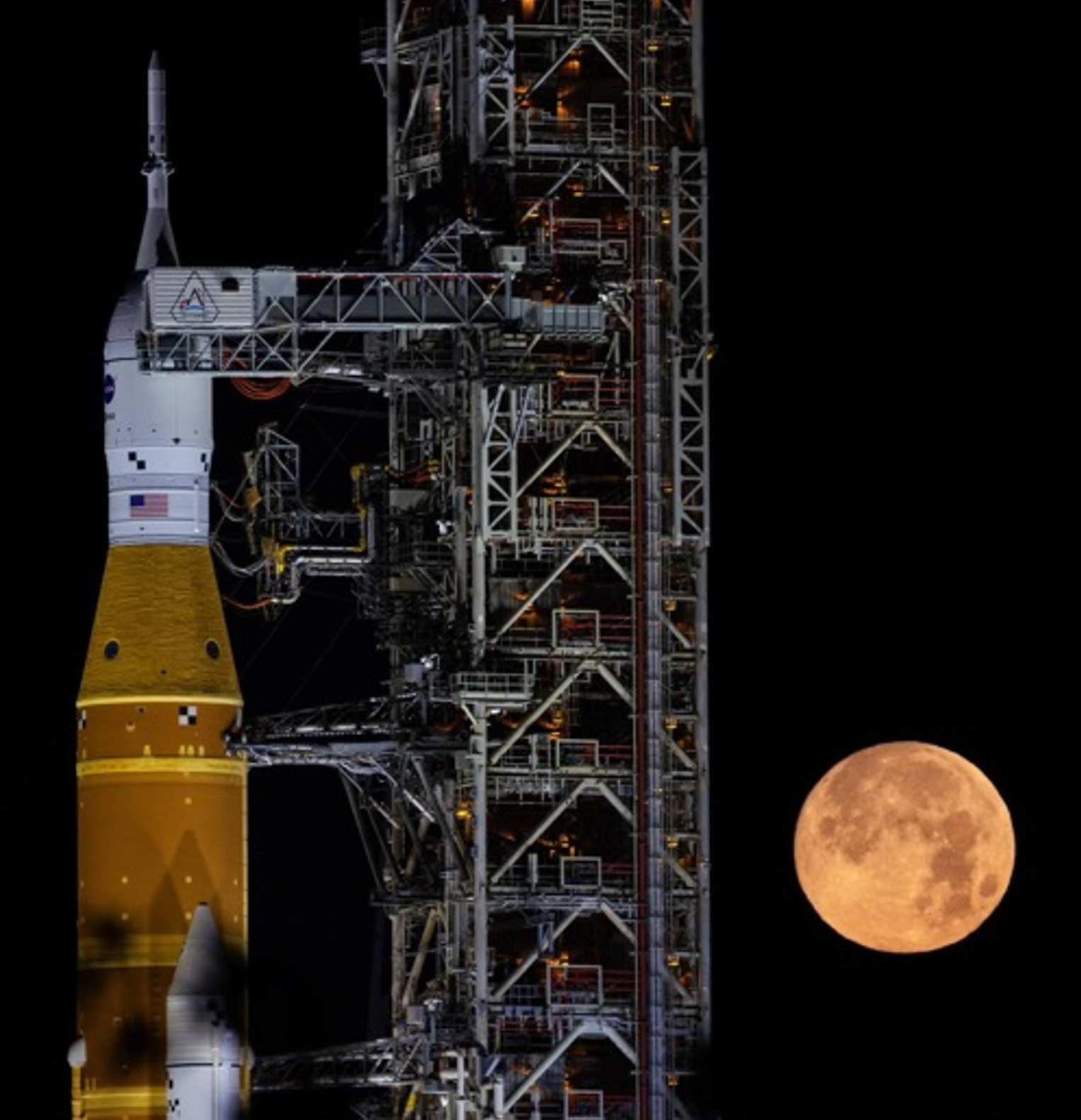
NASA intends to launch Artemis II, early in April. Once launched, during their first day up, the crew will test the Orion spacecraft Integrity with rendezvous and docking tests like those of the Gemini missions, before making the 4 day trip out to the Moon. They’ll arrive near the Moon’s 3rd quarter phase. They’ll whip past the Moon and become world record holders as for having traveled the furthest away anyone has ever gone from humanity. Then by its gravity, they will fall back into a “free return trajectory”, pass the Moon again and return to Earth for landing. All the while, they’ll run biology tests on themselves and run tests on the spacecraft.
NASA engineers have fixed the fuel leak, the cooling helium flow, replaced the expiring batteries and even got a wiring problem found and fixed. As of this writing, the astronauts are in their quarantine and the launch looks good for the scheduled Wednesday, April 1st date with an 80% chance for launching by the weather. Their 2 hour launch window starts at 6:24 pm and lasts until 8:24 pm.
We wish the crew of the Integrity
a wondrous voyage,
a most successful mission
and a safe return home!

